Friday, May 11, 2012
The High Andes of Mendoza...hiking and wine drinking and eating
5-5 Feliz Cinco De Mayo
Had a relaxing day at Colin and Andrea's. Big breakfast after sleeping in a big comfy bed with a tv for movies. Andrea made a huge steak lunch (I have had lots of steak since I have been here as is typical of Argentinean households).
Colin is originally from New Zealand and is a geologist. He does a lot of work here and moved to Argentina 15 or so years ago where he met and married Andrea. He has led an amazing life bc his geology has taken him all over south america, the us, canada, australia, and even Antarctica. He's a worldclass climber and moutaineer. He has of course climbed Aconcagua, the highest peak outside of the Himalayas, but lots of first ascents in the high Andes of Peru. He also did some very technical routes up Mt Cook, and was on the Mt. Cook NP rescue team for a while in the late 70's. He was showing me some of his sweet old photos of climbing the 6000m peaks in Peru and of Antarctica when he went for 2 seasons in 1982 and 1983. It was really funny to see such old pics of Antarctica. funny how mcmurdo hasnt really changed except having newer vehicles and now only 2 bars instead of the 7 that he used to bar hop at. He has some crazy travel stories too. He managed to live in Peru and Ecuador for 6 months on 50 cents a day (back in the 80's). Him and his friend ran out of money though but needed to get to LA for their scheduled flight back to NZ. THey managed to each get 20 bucks on a cash advance from credit cards in Quito. THey then made it to Mexico City before they ran out of money again (eating every other day). They still managed to get to LA where they slept on the beach until their flight.
Andrea is from San Juan province originally. She knows less English than I know Spanish, but she is so nice, and I really like her. She is very impressed by my spanish now and says it is so much better than when we trekked together in Nepal. I am now able to have conversations with her and she knows how to speak a bit slower for me. She treats me like a prince and is always giving me food, making tasty meat dishes and deserts.
They live in a big house in Mendoza and have a boxer named Guiness. On the top of their deck above the 2nd story they can see the mtns and Colin has built a little climbing wall. Colin also paints pictures of all the big mountains that he has visited and they are amazing.
In the afternoon we drove to the tiny village of Puente Del Inca which is at the base of a small ski resort. On the way up we drove through gorgeous red canyons with towering dry mountains all around and gold trees by the river as we went by the town of Uspallata. This is where the movie 7 years in Tibet was actually filmed. Since it obviously couldn{t be filmed in TIbet, I figure Brad Pitt picked the place he thought would be most fun, and well Mendoza is famous for that...and he probably knew he would be spending a lot of time to come in another place that could pass as tibet, Las Vegas, since he would be making the oceans's 11 movies. We stayed at a ski lodge and had a nice dinner up there to acclimate for the night
5-6 We visited Aconcagua Park. We were going to hike up to one of the South Face (the technical face) camps, but the rangers came up and stopped up saying since it was winter, they didn't want to be responsible for a rescue, which of course made Colin angry since the route was still mostly snow free and we wouldn't be in danger. I heard him explain to them in spanish that in New Zealand the parks are free for people to go as they will and mountains aren't closed. He said this happens to him all the time in Argentina where some beaurocratic thing will keep him from climbing something or hiking another thing. I have noticed this as well, all through the world. It is something I think a lot of people in the States take for granted. But it is one of my favorite freedoms in America, and that is the freedom to do what we want in the wildnerness and go where we want. The freedom to take as much or as little risk as we want, by ourselves without a guide. Climbing longs peak is a bit nuts in the winter for the inexperienced, but no one will stop you or make you pay 200 bucks for a guide. THere is the sign there saying how many people have died (I don{t know how much it is any more, but wasn't it about 50) and telling you the risks, by you are free to make the choice to climb or not. Same with almost all the peaks or cayons or wilderness in our parks, forests, and other public lands. Anyways, bc of this we were only able to hike to a very nice viewpoint of Cerro Aconcagua, the highest peak of the Americas and if fact the highest peak outside of the Himalaya standing at 6962m/22,841ft.
We hiked back down and visited Puente del Inca which is a natural bridge formed by minerals coming out of a hotsprings hardening and solidifying the top of a slide that had dammed the river. When the non hardened dirt of the slide was eroded and the lake emptied, the hardened material on top due to the hotsprings didn't get eroded and created the bridge. There is still a hot springs right near the bridge.
The rangers told us of a mountain that we COULD climb bc it was outside of the park (though it had no trail, was steep, and long, so in effect, much more dangerous than the trail they wouldn't let us hike). So we hiked up this steep scree field peak called Cerro Bandarita Norte (about 4000m/13,100ft). It was definitely a tough hike bc of the lack of trail, the straight up steepness, and all the scree, but from the top we had amazing views of the red valley and canyons below, the snowcovered mountains all around, Volcan Tupangato (6500m) and Aconcagua in front of us.
5-7 We kind of relaxed because of the tough day yesterday. Ate a lot of good food, had some good beer. I went for a bike ride with Andrea through a large park in the city and then up Cerro Gloria, a little hill with a big monument of San Martin (the guy who led argentineans over the Andes to help liberate Chile from the spanish), from where there were nice views down to Mendoza with its fall colors.
We watched a funny Kiwi flick called Scarfies, that if you can find it, is well worth watching.
5-8 I went with Colin out in a different direction on a 4wd road to some mountains to take a hike up a pretty valley full of huge granite slabs that is quite famous for climbing. Along the way we passed the last post of the border army for Argentina where we had to show our passports. From that point on, during our hike, we were in a sort of no man's land between the border controls of Chile and Argentina. The drive over had great views of the Cordillera Plato mountains and of Cerro Tupangato towering above miles and miles and miles of Mendoza's famous vineyards which at this time of the year are a kalaediscope of colors depending on the species of grape. Different shades of oranges, yellows, reds, maroons, and greens. Absolutely gorgeous with this unique pattern of colors and the mountains above. And of course had another delicious meal of beef when we got home.
5-9 Colin was off to a field camp for a week so it was just Andrea and I. We worked on some spanish lessons and then went to the supermarket, which was fun for me bc she wanted me to try everything. They are absolutely sooo nice to me! We came home and made giant emapanadas while singing to Shakira.
In the evening we headed downtown to a bar to meet up with friends of Andrea's and Colin's. They go every wednesday night with this group of people which is a mix of Argentineans and ex-pats. The crazy thing about Argentina is how late everything gets started. It was mostly people my parents' age on a weekday, but the drinking didn't get started until around midnight and went until 4ish in the morning.
5-10
I have been having some symptoms the last month very similar to the giardia I caught in Asia. I took some flagelle, but that didn't work (just like it didn't for the giardia from Asia), so I decided to visit a doctor. I have this strange habit of visiting hosptials in strange lands. Andrea had a friend, Lucas, who is a doctor so I went to see him. He just gave me a prescription to get an analysis done when I get to Buenos Aires. I wasn't completely sure why they couldn't do it here, but I think it's bc they thought I wanted to leave for BA before the test would be finished. My spanish in medical terms isn't so great, but Lucas knew some English. The funniest part was how he kept saying I would need to "give a shit for the analysis". It kind of cracked me up. It was obviously the only word he knew similar to stool sample, but you just think of how sterile doctors are in the states using words like stool sample or bowel movement.
After visiting the doctor, Andrea toured me around downtown Mendoza. She took me to a fancy outdoor cafe for breakfast where people eat panini's and have cappuccinos (well, of course I had a hot cocoa), and we watched the people walk by on the pedestrian street, including a protest of striking power plant workers who were setting off loud fireworks. We then visited some of the big plazas of Mendoza and visited an old art museum. We then did some shopping at vegetable markets to prepare for a big taco fiesta Andrea was hosting that night.
In the afternoon we went for a bike ride up a hill on the outskirts of Mendoza and then came back to start working on the taco dinner. Of course, as in typical in Argentina, it all got started late and the guests arrived around 10pm. We played some Jenga and other games before eating around midnight. Then the drinking began with the popular Fernet and Coke and a couple of other popular mixed drinks here, one of which was fairly similar to a gin and tonic. Everyone was very nice and they spoke slow spanish for me so I could understand, but eventually they had too much to drink and the words became faster and more slurred, so that I was hopeless to understand. I went to bed about 3am, but today I heard the party raged on until 5 or so in the morning.
5-11People were still around this morning to have breakfast and others that had to work stopped by for food during the afternoon siesta break.
This evening I have a night bus that takes about 15 hours to Buenos Aires. I will be sad to leave bc it was a nice "vacation" from my travels, but I am ready to get moving on. But I am greatly appreciative of all they did for me, and it was cool to hang out with some people who live here and do more than just the typical tourist and travel things.
Tuesday, May 8, 2012
Santiago
5-3 I went with Carola in the morning to the huge city fruit and vegetable market. By far the best fruit and veg market I have been to so far in South America. The funniest sight in the market though was a closed stand. It was covered in flags to cover the fruit. It was covered by 6 large flags. The flags of choice...none other than 6 with the great seal of Idaho. We had some street food of fresh squeezed orange juice and sopapillas for breakfast. Carola needed to go work on her Thesis, so I then went off to explore Santiago by myself. Santiago is not a super impressive city. Nothing wild or crazy or standoutish about it. But that's okay. It was just very calm and sane and rather relaxing and easy for a city.
I took an ascensor (funicular) up Cerro San Cristobol, a small mountain in the middle of Santiago which has a giant 40ft tall Virgin Mary statue on the top. It was kind of cool bc it was very relaxing up at the top, away from any noise of the city. For awhile there was meditation music playing, then someone began saying the rosary in Spanish. From up on the top, you could look down all across the city, though it was quite foggy. Santiago sits in a valley between the mighty Andes and the coastal range, so it has notoriously bad winter fog. And right across the city, through the smog, but still visible, rose the giant snow-covered Andes (some up to 20000 feet). Had it been clearer, I would have been able to see the 4 ski resorts just outside of Santiago, including one called Cerro Colorado.
I walked back down the hill and grabbed some lunch. Street food of empanadas, completos con palta (avocados), and mote con huesillo (a drink with dried apricots, barley, and nectar). After lunch I walked through the downtown and visited the plaza de armas (which of course they have in every town in Chile), the huge downtown cathedral, mailed a postcard from the beautiful post office, and visited the presedential palace. Also went to the central market which is full of fish being thrown around everywhere.
In the evening I made it back to Carola's where she hosted a bbq up on the top of her sister's flat on the rooftop. It was full of beef and beer and chilean wine. Her friends were really cool and the bbq was fun. Being part of the educated upperclass, they all spoke English and a few had been to the USA.
It was interesting to hear their stories about the real Chile, the chile you don't know about as a traveller. And the most entertaining were their stories about being in the 8.something earthquake that ocurred in Concepcion and Santiago a couple of years ago. It lasted for 3 and a half minutes, and they said it was like being on carpet waves like when a carpet is being shook outside. They definitely couldn't stand during it.
They were also telling me about the big student protests going on right now. The students are peaceful, but the police get pretty violent with tear gas and riot gear, and they have this vehicle that the students call a guanaco (named after the llama like animal in patagonia) bc it spits out chemicals just like a guanaco. This is actually the first time that Chileans have even been able to protest bc they have always had such a militaristic and dictator gov't. They are currently protesting bc of high cost of education. They are actually pretty mad at the USA as well bc we apparently helped put in the current president bc he was capitalistic. But he is so far capitalistic that he has no social programs, so everything costs lots of money, including schools. He went way further capitalistic than the USA. Speaking of the USA, people often complain about how hard it is to get a US visa and how even if you are denied, you still have to pay the 150 bucks, which is quite expensive for a lot of countries. Carola tried to get a US visa a couple of years ago to visit a friend in Vermont. She didnt even make it to the interview portion before she was denied. Our immigation is so crazy. I mean she comes from a wealthy family, has an apartment, and was a few months out from starting a masters degree in London for which she had a full ride scholarship, so obviously she wasn't going to try and stay in our country. And even if she did, she would be the type of person we would want. Highly educated, worldy, an entrepeneur (she is going to be starting a sustainable cultural tourism company in Chiloe). The kind of person we should want in our country.
5-4 Took a bus from Santiago to Mendoza. It was a GORGEOUS drive. The most exhillerating ride so far in South America. We went over this huge pass to get into Argentina. We passed by Portillo, the best ski resort in Chile, which I could definitely tell would be awesome. The road wound up 35 plus curves (I forgot to look at the last few signs counting the curves to know the exact number). The road was impressive not only in scenery but in its engineering feat and in the fact that hundreds of buses and trucks go over it everyday carying goods from the ports near santiago to mendoza, buenos aires, and even Brazil. As a Coloradoan, I have been over my share of pretty cool passes, but this one still took my breath away. Such beautiful scenery, intense drops, and right up along a ski hill with chairlifts going over the road. Along with the curves it had several very long avalanche tunnels and at the end, a tunnel, about as long as the Eisenhower tunnel in I-70 that took us into Argentina.
The argentine side was drier and with less snow. The road snaked down a deep, red canyon. It was like Utah or Nevada in some ways, except with bigger mountains. The river running through the canyon was red, like the red of rivers full of blood in movies.
Colin and Andrea, who I climbed Mera peak with in Nepal, picked me up at the bus station and took me out to a very nice dinner at place that had its own microbrews for a fun friday night out in Mendoza, one of the most happening cities in Argentina.
Saturday, May 5, 2012
Valparaiso: Bohemian city on the sea
5-2
Panchi had just come into some money, bc, sadly, her father had recently passed away. With the money, she bought a huge mansion type house overlooking the ocean in Valparaiso. It´s giant and really cool. Throughout the day, we were making plans of how to make it into the coolest hostel around.
Panchi, who is going back to school for another undergraduate degree (in mathematics) went to school, so Carola and I roamed and toured the hilly streets of the port town of Valparaiso. Valparaiso is composed of the port, the flat area off the port, and the 43 cerros (hills) that rise up steeply behind it. Multicolored buildings and mansions are all built densely up on the hills and are connected by steep roads, winding staircases and ascensors (funiculars aka cable cars) that lift people up the heights to the houses and buildings. From Panchi´s mansion, you get a sweet view of the port and the city and its hills wrapped around it. You can see all the brightly colored houses clinging to the hills and the churches speckled around each Cerro. It´s fun to try and explore the city bc you have to navigate through the maze of streets and stairways connecting the cerros as well as find the correct funiculars to ride. Carola said that it´s a famous expression in Chile to say that "the girls in the port have the best asses" because of all the steep hill and stair walking they have to do each day between the markets and the houses. Down below on the flat area are street markets filled with super cheap fruits, vegetables, and of course fish. Valpo is famous for its art, music, and philosophy...a very bohemian place. There are loads of wall paintings all throughout the city, most of them quite amazing. The entire city is actually a UNESCO world heritage site. It's had quite a crazy history as it's been built up and destroyed several times (by pirates, by the spanish, by earthquakes, and economically by the building of the Panama canal which made its importannce as a port city for the USA less important as the ships no longer had to pass through). It has all the traditional things associated with port cities from rough sailors to prostitutes to gypsies.
We also walked through el Museo de Abierto Cielo, the open air museum, an area with especially good wall paintings. Walking around the city is truly spectacular bc you get great views down to the port and then just a different cool and unique brightly colored street of houses around every corner. Some of the coolest houses are the really narrow ones with streest going around each side.
For lunch, we met back up with Panchi and had fresh fish empanadas, mussel soup, and fresh grilled fish at the market. After that we went back to her place and went to the very top of her mansion where she has a little room on her roof completely surrounded by glass which has great views of the city. From there we drank some cream pisco and talked more about making the hostel. Carola is very serious about it and wants to do it.
After that we drove back to Santiago (Panchi lives with her boyfriend most of the time in a flat in Santiago). Carola had yoga class, so I spent some time catching up on internet stuff and then we had a tasty salad from her sister´s garden and some steak.
Elqui Valley:Pisco sours, cosmic energy, UFO´s, and verdant green, grape filled valleys
4-30
I slept through the earthquake aftershocks and headed out in the morning to Pisco Elqui via bus. The bus ride of course was gorgeous as it wound up a valley with dry desert mountains on both sides with a contrast of bright green in the valley filled with pisco grapes (the famous grape used for making Chile´s national alcoholic drink, Pisco, which is used in Pisco sours and Piscoke), avocados, and papayas. Up ahead in the distance were snow covered peaks. At the tiny village of Pisco Elqui, full of brightly colored adobe houses, pisco vineyards, and blooming flowers, I hiked a bit up the road for some nice views of the fertile valleys set below the dry mountains. Today was the hottest I have been in forever and I was sweating a lot and enjoyed some icecream and fresh fruit juice from fruit in the valley. I then did a quick tour of the Mistral Pisco distillery where I spent some money buying 2 bottles each (a creme pisco and a regular pisco) as thank you gifts for the people I would be staying with in the near future...Carola in Santiago and Colin and Andrea in Mendoza. After that, I hiked down to Monte Grande, birthplace of one of Chile´s pride and joys, Gabriela Mistral. a noble prize winning poet (and humanitarian). From there I took a bus to Vicuna where I hiked up Cerro de La Virgen to watch the sunset. From that little hill, I was afforded nice 360 views of the Elqui valley. I could also see some of the astronomical observatories on the mountains. The Elqui valley is also famous for its astronomical research because of it´s clear skies. In fact, a couple of the observatories are run in part by the University of Arizona. The Elqui valley also sits on one of the meridians, which means it is supposed to have special magnetic and cosmic energy; thus, lots of hippies and new age people hang out here. It´s also famous for being one of the places with the most UFO sightings (could it be all the pisco?)
Back in La Serena, I took a late night walk to the beach and lighthouse (el faro) with a french brother and sister. It was an entertaining walk bc the girl knew just a bit more english than I know spanish, was pretty fluent in spanish, and the guy only knew french and a small bit of spanish. So as we walked in talked, me and her conversed in a mix of spanish and english, using the other language when we didn´t know the word we wanted in spanish and then she translating the whole conversation to french. Had to have been funny to listen to.
Before our walk, the man who runs the hostel showed us how he makes these artisan shoes and sandals out of leather and then decorates them by stamping them and dying the leather.. I didnt feel like I needed any new sandals, so instead I made a leather bracelet.
5-1 Today was a national holiday equivalent to Labor Day. The government mandated that basically everything be closed including supermarkets and mcdonalds (but amazingly not bus companies). Because of this the city was like a ghost town and deserted. I spent the morning walking a bit around the city and visiting the plaza de armas and walking down to the beach and lighthouse to see it in the daytime. I was lucky that I had heard wind of this holiday before and had booked my bus ticket well in advance bc even booking in advance I had to go to at least 5 bus companies before I found a bus with 1 seat left. I took an afternoon bus to Santiago where after a short subway ride and walk, I arrived at Carola´s apartment. Carola is a friend I met in Ghorepani, Nepal while trekking. In fact, she was the gal that introduced me to jumping Polly from Idaho who hooked me up with Ildi who helped me land the job in Antarctica.
Carola is recently home from the UK. She has been studying for a masters in London and is back now to carry out her research on the Island of Chiloe (near puerto montt). She is studying something to do with indigenous cultures (the mapuche) and sustainability and tourism. She has been living with her parents on the outskirts of santiago, but her sister and her sister´s boyfriend are taking a holiday to Bolivia, so she is house sitting their flat (complete with rooftop garden and compost worm farm) in downtown Santiago. When I arrived, she welcomed me with some herbal tea and then cooked a traditional chilean dinner for me. Her sister and sister´s boyfriend´s flat is on the top floor and they have a garden on the roof, so we went up there and had some wine and watched the lights of Santiago. They have a great view from their roof, and I can´t wait to see it in the day; however, her friend Panchi called, and we made a quick 12am decision to drive to Panchi´s house in Valparaiso a couple hours away on the coast. So we quick packed up and were picked up by Panchi and we headed out.
Thursday, May 3, 2012
Earthquake!
4-30
At around 3am in the morning I was awoken to a shaking and loud grinding noise. A bit delirious after a late night of going to bed around 2am after having a whole lot of wine with the Australians, I wasn´t quite sure what it was at first. Then I realized what it was and thought, "cool!", as being in an earthquake was a Chilean experience I definitely wanted to have, and they had been having plenty in the Santiago, Valparaiso area. I had been in a smaller earthquake a few years ago in Bali, I think like a low 5 on the richter scale. The thing that still surprised me about the earthquake bc it´s not something that is portrayed on TV, is the sound. The noise is loud and intense and just comes from deep in the earth. In my state of drowsiness and intoxication, I didn´t make any quick movements to get outside (nor did any of the chileans as they experience so many big ones here they don´t think much of it) and just sort of let it rock me back to sleep. In the morning I had almost forgotten about it, thinking it was a dream until someone asked if I had felt it. Turns out it was a 6.0 on the richter scale, which is a pretty decent size. The epicenter was only 5km from La Serena
La Serena: Amazing Wildlife experience
4-28 I arrived at 6am to Santiago and boarded a connecting bus to La Serena, a city north of Santiago along the coast. It was a beautiful bus ride, as all Chilean bus rides seem to be with view of the wild coast on the left and the big snow covered Andes (6000m/19,500ft) peaks on the right. The landscape became drier until the nearby hills were covered in cacti. I arrived in early afternoon to La Serena, so I had time to explore the city a bit. Immediately, it reminded me a whole lot of southern California. It has a Mediterranean type climate, so getting off the bus I was greeted with the warmest air I have experienced since early last September in Colorado and palm trees. The resemblance to california started right away with a huge strip mall right outside the bus station and a giant hyper lider (owned by walmart) as well as a mcdonalds. There palm trees and blooming flowers (including hibiscus) everywhere. The buildings are really cool bc they are adobe-ish and most a cool shade of red, pink, orange, or yellow with unique windows and doors. The architecture, colors, vegetation, and feel reminded me a bit of certain parts of southern california or even Tucson or even parts of Italy. My hostel had a nice open air courtyard where you could eat and chill. But don´t get me wrong, it still wasn´t super warm. It was a bit overcast and I was okay in a t-shirt, but by night, you definitely needed a jacket. The small city has 29 churches, and I went to mass at 1 of them. This is also the first place that I experienced much cheaper food. In South America, the further north you go, the cheaper it gets. I got a big lunch here with steak or fish, salad, rice, and bread, and a big glass of wine for 3 bucks.
Walking around the city really reminded me of Tucson. I love the feel of the desert, the scenery of the desert. There is just something I really love about the desert, especially desert with mountains. Part of it is probably bc I am a Colorado boy at heart so I love dry air and bright blue cloudless skies. But I think part of it is bc I have strong memories of Marana and Tucson from my childhood. The desert takes me back to hanging out with the Halbachs. To grandma and grandpa´s farm, to living it large with Mary, to the scrumptious food of Diane´s, to the Halbach Castle with the cousins, to the shopping sprees with Aunt Lucille, to the intensity of the wildcat cheering get togethers to tours of the farm with Ted, and of course to the road trip there through the deserts of New Mexico and Arizona with Mom and bro. Those are some of my best childhood memories. Whatever it is, I always especially like it when I arrive at mountain desertscapes.
The city was small and the bright buildings and narrow streets were easily explored in an afternoon. I visited some of the colonial churches (La Serena is the 2nd oldest city in Chile, so it is full of colonoial architecture). Also walked a long a long blvd with a central pedestrian path with greek and roman statues lining the path.
At the hostel I ran into a couple from New Mexico that I had met trekking before. They were probably in their 50´s and said how much it reminded them of new mexico, and the lady was especially happy to be back to warm days and cool nights, just like NM. They too had been in situations like mine at Antuco where park rangers had not wanted them to do treks. At one place, they had to sign a piece of paper that said they would not do the trek. Of course they were equally well prepared, but she said she had told her husband, one more cold trek and then it was time to head north to the warm. So there they were, enjoying the warmth and flowers.
4-29 I had booked a tour to go out the Reserva Nacional Penguino de Humboldt for 8 in the morning. At 830 There was still no sign of the van, so I was getting nervous that they forgot me so I called the number I had, and the guy said, esta bien, it´s all good. Then come 9am, still no van. Around 920am, the van rolled up much to my relief. Apparently, unbeknownst to me, the time had changed that morning, so my watch was fast an hour. It was sort of a last minute change of time, and I had no way of knowing without having the internet or newspapers. And the tour agency hadn´t even told me. The funny thing, is that a month or so ago when I was in Puerto Natales, the rest of the world that changes time, changed (including the USA). Everyone´s cell phones and computers in Chile changed as well. This is bc it was the time that Chile always had and was supposed to change. But the president had declared, in a show of power I guess, that the time would change later. But bc everyone´s electronic devices changed, people supposed to catch the 8am buses to the NP missed them bc they had changed their watches thinking the time was changing. Just kind of one of those funny things with a semi-dictator led country.
Anyways, it was an absolute gorgeous day. Not a cloud in the sky. We had a 2 hour drive north going through beautiful desert scenery complete with large cacti and the coastal range as well as coastal scenery with large crashing waves. There were even some sand dunes. We spotted some Guanacos, a rare sight in the deserts around here. When we reached Punto Chorros, we hopped in little boats to make the trip out to Isla Damas and Isla Chorros. On the way out, we were surrounded by a pod of Bottlenose dolphins. I was so HAPPY for this! Dolphins have always been one of my favorite animals, but I have never seen Bottlenose dolphins which are the most playful and some of the biggest. I had only seen common and spinner and river dolphins before. So this was an exceptional treat. True to their normal behaviour, they swam powerfully around the boats, quite curious and kind of showing off, jumping around a bit so that at times you could see the whole body of the dolphin out of the water. To see them swimming around with all their power and grace in the water was truly amazing. There were lots of them and they swam all around the boat.
Once at the island, we saw a huge colony of sea lions, complete with young pups hanging out on the jagged rocks. Further along we saw lots of the highly endangered Humboldt Penguin staying further up on the mountain, very wary of the sea lions below. We saw lots of other of the "cooler" big species of birds including Peruvian boobies (and fluffy babies), commorants, and vultures. We were also very lucky and caught a glimpse of a sea otter. As we went along the rocky island we took the boat into a couple caves carved out by the waves of the Pacific.
After wildlife watching along Isla de Chorros, we headed to Isla Damas (looks like a female profile from a distance) to hang out. I went for a short hike and saw 2 gorgeous white sand beaches. One of the sweet things about this area was in one line of vision I could see the cacti on the island in front of me, a white sand beach with turquoise waters (like Thailand), the dark pacific, dry mountains and sand dunes on the land behind the ocean and in the farther distance, snow covered peaks (from that big storm I ran into on Antuco Volcano). Amazing really.
One of the best excursions I have been on here. An awesome wildlife experience. One of the better wildlife type safaris I have been on for a long time. The whole trip you were constantly spotting wildlife. And of course the penguins are so cute and the dolphins so spectacular. It was also a treat to be visiting these islands bc this is a place you study in Ecology. The reason these islands have so much wildlife and the reason that the mainland is so dry is due to the ecologically famous humboldt current. It´s a very cold upwelling current that brings lots of cold nutrient rich water to the surface which leads to an abundance of fish such as sardines and that of course leads to the abundance of animals like dolphins, otters, penguins, and sea lions that feed on them. The cold current also affects the climate in the area which is why it´s so dry on the mainland. Further up the coast it´s so dry, like near the Atacama desert that it hasn´t rained in a very long time, though they get a foggy mist every morning.
After the trip we had lunch in the rustic, yet charming little desert village of Punto Chorros at a restaurant in an olive garden where we were served delicious fresh fish.
Back in Serena, I went to mass at another church and then had a fun time with some Aussies (studying at a university in Santiago) who had bought too much wine and beer and were all too happy to share it with me.
Wednesday, May 2, 2012
A crazy Chilean Experience: hike around Volcan Antuco in a Viento Blanco
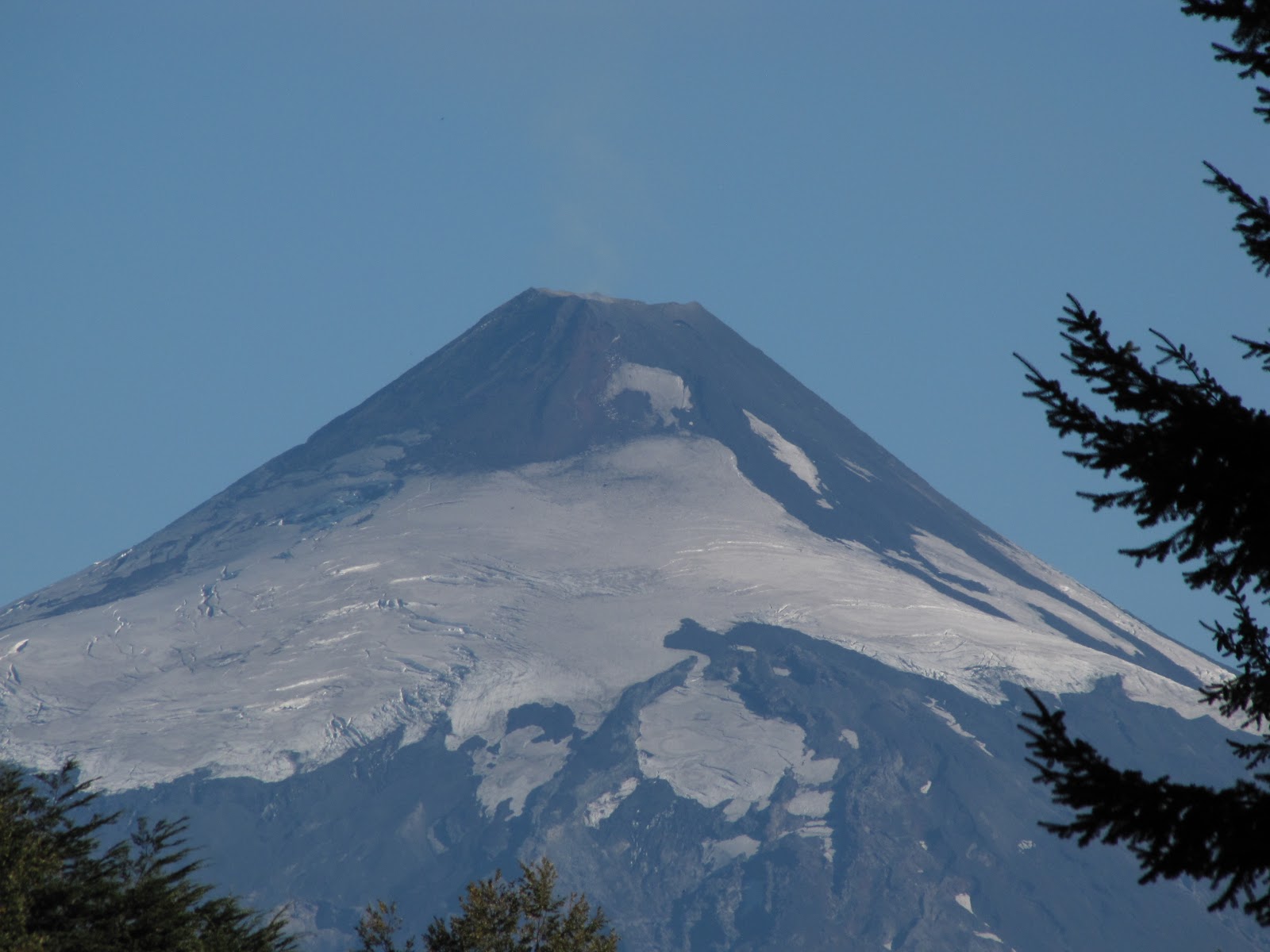
4-24 Took a bus from Pucon to Los Angeles. I was on one of those double decker buses and because I booked early, I had the best seat of on top and in the front right over the driver. Nice view of the road and feels a bit like your riding a rollercoaster when going down hills. After arriving in Los Angeles, I had to walk across the city to get to the rural bus station. Along the way I got walk through a cool market. From there I took the bus to El Abanico, a small town near Parque Nacional Laguna de Laja. I always like going to places off the tourist trail and off the beaten path. You seem to always have cool experiences when you work hard to get somewhere not many people go. I took a chance going here bc I didn´t know if there was any accommodation, or at least budget accommodation up there. But this is why I am carrying a tent and stove so that if need be, I can just camp off the side of the road. When I got to the tiny, one street town, I was just kind of wondering around to see if I could ask someone about a place to stay. As I walked by this one house, a dog barked at me, and a man came out asking if I needed a place to stay. I later learned he had trained the dog to bark when the few tourists went by. He invited me in and hosted me like a fancy Hawaiian resort would with coconut biscuits, pineapple juice, and tea. The only difference was the nice and warm fire. He had a couple rooms in the back that he rented out for 20 bucks including breakfast, lunch, and dinner. In Chile, foreigners have to register at guest houses and I saw that I was only the 11 person to register here this year. 5 of the other 10 being two different groups from Colorado. I had a nice dinner with their family (all only spoke spanish), but we had a lot of fun laughing and talking. He is a miner specializing in dynamite. That afternoon I got a pretty decent view of Volcan Antuco and the Sierra Velludas mountains with their glaciers surrounding the volcano. It would prove to be my only view...
4-25 I hitched a ride the 11km to the entrance of the national park with 2 guys working on building a bridge on the 4wd pass that goes to Argentina. At the ranger station, the ranger asked me what I was planning on doing. I told him the circuit around Antuco Volcano. He told me I couldn´t do it bc the weather was going to be bad that night. He said it was going to rain. I listened to him and said okay, but in my mind I knew I was still going to do the circuit. One of the things you deal with, with guidebooks, tour operators, and rangers is that they always underestimate you or make things sound way worse bc they have to expect that every person doesn´t really know what they are doing. I mean they really talk about how crazy difficult torres del paine is, but of course there, a lot of the people had never even set up a tent. So I have learned to kind of ignore these warnings, knowing that I am very experienced in the outdoors. Plus, my guidebook had said that for this hike, December and May were actually the best months to trek it because it wasn´t so hot. I had been rushing to get through all the other treks bc most of them were supposed to be good from January to April, and so I had actually been pushing past the time when they were suggested to hike them bc of the winter coming. But this one I hadn´t been worried about bc it was further north and the book said it was best in May. So of course I was thinking the end of April would be fine. And I was of course well prepared with a good tent, sleeping bag, waterproof shells, two fleeces, and waterproof bags for all my gear and warm sleeping clothes.
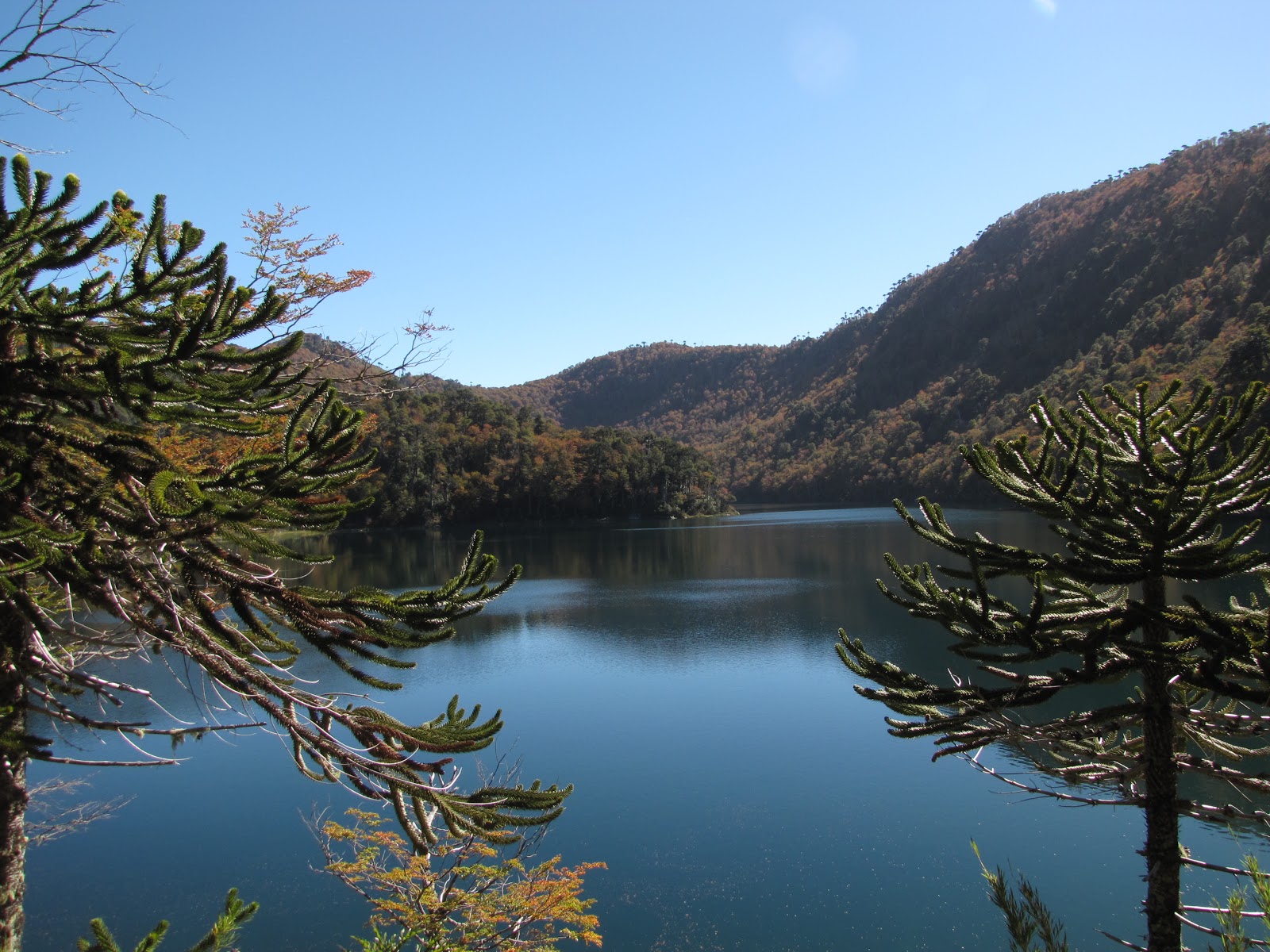
I started out on the trek which climbed out of the valley and eventually crossed a large river of solidified lava that was pretty recent. You had to follow bamboo sticks as there was no way for a trail here. I also took my bearings for the low part of the pass between the volcano and the Velluda mountains since due to the lava environment, there was no trail. After an hour the weather came in and it started to rain pretty good. But I continued on. Eventually, the rain turned to heavy and wet snow as I began climbing up the pass. It didn´t bother me, bc those that know me, know that I LOVE walking and being out in the snow, especially the big flakes. In the snowstorm, the mountains and even the pass were completely hidden behind clouds, but I had taken my bearings and knew which way up and over the pass. The snow intensified as I approached the top of the pass, and by the time I got to the top it was probably 6 inches deep and visability was near zero. I didn´t linger long on top of the pass (2054meters, about 6780feet) and started to head down. Curiously, and it probably has something to do with the air cooling off as it goes over the pass, but the same elevations that were rain on the other side were still heavy snow on this side. I got to the campsite, Los Barros, around 4pm, which was marked by a lone Auracaria (monkey puzzle) tree. The only tree along the ENTIRE circuit. Most people do the circuit in 3 days, but bc it was only 45 or so kilometers (not including the 11 there and back from Abanico to the park entrance if you can´t hitch a ride), I was doing it in 2 days. Because of the heavy snow, the cold, and the early hour, I decided to keep walking and get closer Abanico so that I could be sure, in case I couldn´t hitch a ride, that I could get to Abanico in time to catch the last bus back to LA so that I could catch the late night bus I had already booked to Santiago and buy a ticket onward to La Serena. After the campsite, the trail, or the non trail, turned to a dirt road. The road that was part of the park and that went on to the Chile/Argentine frontier. So from there it was basically 27km´s on the road along the giant Laguna de Laja (which my book said was perfect for swimming this time of year!) back to the park entrance. I couldn´t see the lake at all bc of the heavy snow, but I trusted it was there and left the lone tree as I walked along the road. Before long, I heard a bus coming behind me, which I thought was really strange. The bus stopped and a guy jumped out and basically made me get on the bus. It turns out it was a bus full of military guys who were getting the heck out of dodge with the snowstorm. They wouldn´t let me off the bus, or not until 17 or so km´s down the road where there was a small ski hill and a small ski base. The bus ride was fairly comical bc all these soldiers were looking at the crazy gringo, my outer layers dripping with melting snow and my pack cover still holding several inches of snow on top. Along the way, the guy in charge who had made me get on the bus was telling me about the Viento Blanco (or blizzard, I assumed) that had happened before, killing 45 soldiers. This explained their fear and quick retreat and their fear for me. At the ski resort, I thanked them for the ride and they continued down the hill. There was a small refugio that is open during ski season (mid july through september, here), but there was a guy working on repairs there. He had a fire going and invited me to join him by it. I could have easily survived in the snow outside, where the soldiers had picked me up, or even here, but it was a super wet snow and it was cold, so I wasn´t necessarily disappointed to have this warm area. He also let me set up my tent out of the snow under a shelter, which mainly made cooking life easy. I am just carrying a small tent I bought here that doesn´t really have a vestibule. My 4 season mountaineering tent back home has a vestibule for cooking in the case of bad weather, and bc the only tree in the whole park was that lone auracania way back there, I was kind of wondering how my stove would hold up in the heavy snow and how fun it was going to be cooking in it.
I was a bit bummed to have the bad weather in terms of not being able to see the volcano that I had trekked around, and still hadn´t seen the lake bc the snowstorm created such poor visibility, nor the Sierra Velludas which are non volcanic, jagged mountains with hanging glaciers. But at the same time, it was quite an experience to be out there all alone in an Andean blizzard and have all this excitement happen with the soldiers and all. Laguna de Laja was actually created when a lava flow dammed the Rio de Laja (I think Laja means smooth rock). Now the lake has been altered by a human dam as well. And even in the bad weather I still got an appreciation for the completely volcanic and solidified lava landscape.
4-27 It snowed all night, but only stuck here and there at the ski base. In the morning, I still wanted to see the lake and it was snowing less, and I had plenty of time to get back to Abanico, so I retraced the road that I would have walked had I not been on the bus. Plus, as I mentioned, I just love walking in the snow. Today, I could see part of the lake. I also walked by the huge memorial to the 45 soliders (44 of them born in 1986 and one, the commanding officer born in 1960) who died in the Viento Blanco (white wind)...Google Tragedy of Antuco (the biggest small village near the park) if you want to read more about the tragedy. It happened May 18, 2005. It of course happened in May, during what my trekking guide book said was the best season to do this trek. Of course my book was published in 2003, so it was before then. But when I get a chance I will definitely be writing the lonely planet to give them an update about what happened there and to let them know that they should give more of a warning that in April and May big snowstorms can happen. I was fine and prepared, but a lot of trekkers I have met in other areas would have been in more trouble and the book made it seem like snow was not an issue until June. Along the way, I also walked past the 45 individual memorials and crosses put up for each soldier. Definitely a sobering walk. I walked as far as Gringo Point where the lake was at it´s narrowest and where it also happened was the edge of the lake at the moment bc the water was lower than normal. It snowed the entire walk and was rather beautiful in the stark, tree-less landscape. It was still snowing hard enough I couldn´t see the volcano or other mountains, but I could see the lake and some of the other white landscape. On the way back, I soon got picked up by some other bridge builders who dropped me off at my family house in Abanico where I was greeted with a warm fire, hot tea, and a steaming plate of spaghetti! After drying off and eating, I took the little bus down to LA and then boarded a night bus for Santiago.
In the end, it was definitely worth going off the beaten path. Got to hang out with a nice family and then got quite the Andean mountain blizzard experience, which was amplified by the previous tragedy in a previous viento blanco. I never felt in danger b-c I was prepared with a tent and all that in case the blizzard had picked up so bad that I couldn´t see anything, but I could definitely see how one could get very disoriented out there since the land was stark and with no trees. The other thing I had going for me with navigation was that I knew the road went between the volcano and first the mountains and then the lake. So if at any point I was going up too much, it meant I was climbing the volcano which was wrong and if I hit the lake, well, that was also the wrong way, so it was easy to navigate myself. It was funny bc back in the little town I was the talk of the town, the crazy gringo out there hiking and camping in all the snow after the border patrol and gotten off the mountain as quick as possible, but reported that I was okay and smiling and actually trying to get off the bus to get back to the hiking.
Subscribe to:
Posts (Atom)